Hanoi 1

Hanoi 1
22 March 2010
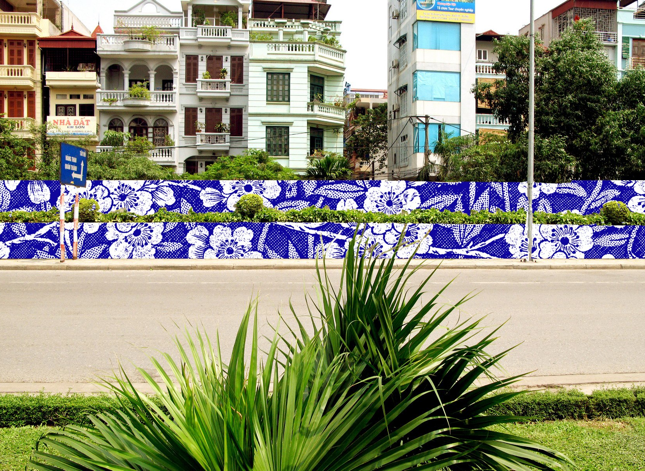
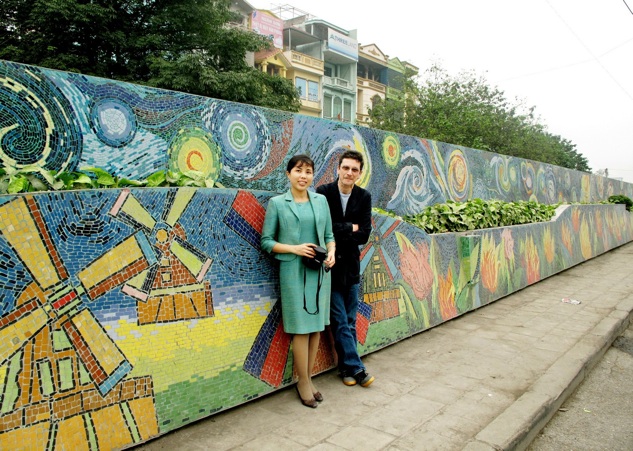
In Vietnam working on the Hanoi Mosaic Mural - a 6 Km long artwork being made to celebrate the city’s 1000th birthday later in 2010. My contribution to the mosaic has been made possible by funding by the British Council in Hanoi (for travel costs) and local sponsors. Thus far Vietnamese artists and community groups together with artists from Argentina, Denmark, France, Italy, Spain, USA have designed sections of the mural - which covers the dike wall along one of Hanoi’s main roads running next to the Red River. Installed sections sparkle in the sunlight during the day and traffic headlights at night - they add colour, detail and visual richness to an otherwise drab, grim graffiti stained concrete form framing the highway.
My contributions will be three 30 metre sections of mosaic. The first is a detail of a massively enlarged floral tableware pattern derived from copper printing plate found in the archives of the Gustavsberg Porcelain Museum near Stockholm - very similar to the Calico pattern still made by Burleigh in England. Derived from an early Victorian pattern its origins lie in the decorative language of Asian porcelains, and it represents the spring - with fallen prunus blossom (appropriate timing as I blog in March). My interest is in the way in which image and pattern change as they journey across the globe, and are appropriated and absorbed into artefacts in different cultures. I’m also examining the way in which they change according to the holding media. In this case the scanned print was taken from a surface inked intaglio copperplate, so the graphic is not as originally intended - it includes marks and detail which would not be found on the related printed ceramic objects. These qualities were the unintended outcome of having to relief print the coppers (an intaglio printing press was not available on my research visit to the museum in 2002). Now the original print is massively enlarged and remediated as mosaic. The blossoms are taken back (in Springtime) to South East Asia, and re-worked by Vietnamese artisans into a new form cloaking a highway wall.
The technicalities of realization include digitally outputting the re-worked pattern via an A0 digital printer, then coating/glueing with customized mosiac shards to match the printed pattern. A plastic film will then be applied over the artwork before transportation to installation site - more detail another day... Here is the work on this first pattern in progress....
Mock up of Mosaic Number 1 on Red Dike wall
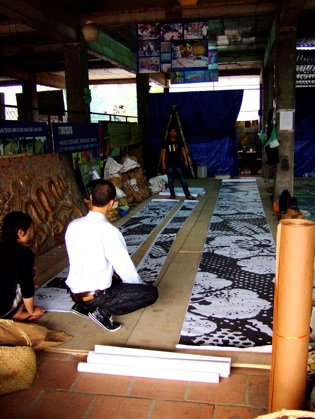
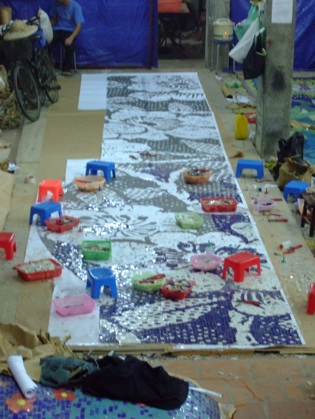
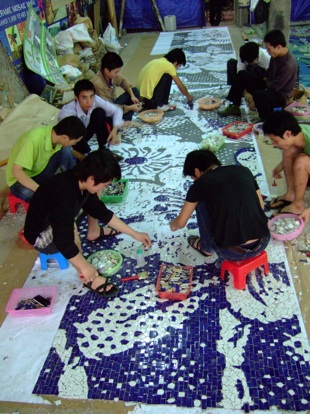
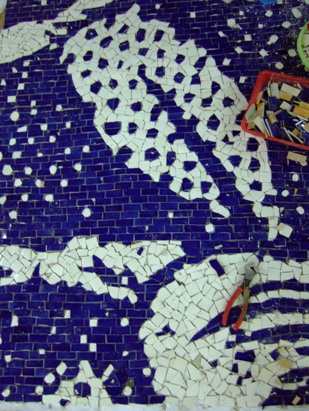
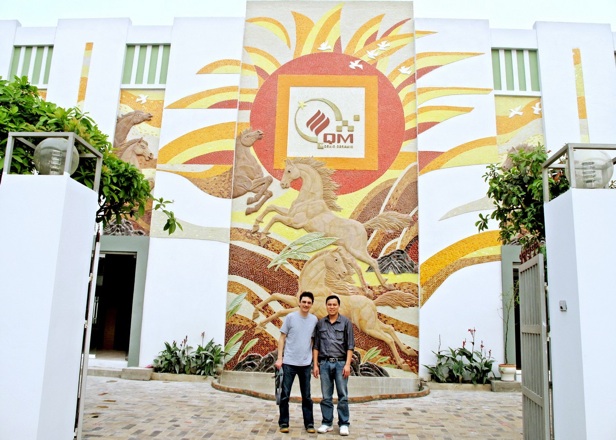
Above: From top left - Doan supervises print rollout and assemblage (Saturday late afternoon), then (Sunday afternoon) mosiac tiles being customized and applied - the pattern begins to take a new form. The tiles are made at Bat Trang ceramic village and another tile workshop here in Hanoi.
Below - outside the Bat Trang mosaic factory, and a jet-lagged Paul with Thu Thuy beside a completed section of the mosaic funded by the government of Netherlands
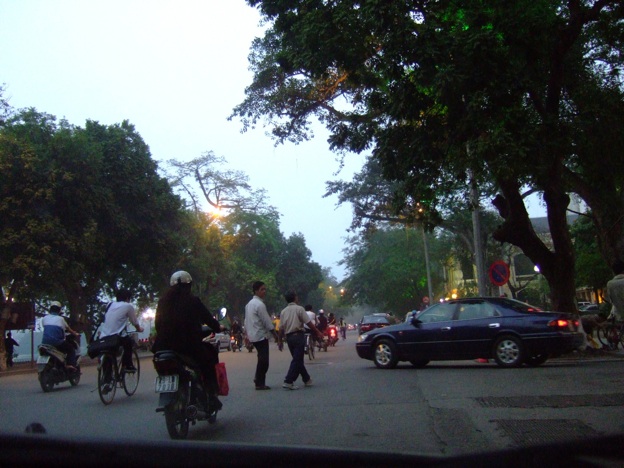
Below: Evening on a Hanoi street - bikes motorcycles, cars and pedestrians meander - ignoring most road signs, markings and rules to accompanying swerves and beeps - somehow it all seems to work.